 $4700
$4700
The digital signage market was valued at USD 23.12 Billion in 2025 and is projected to reach USD 45.76 Billion by 2035, expanding at a robust compound annual growth rate (CAGR) of 6.8% during the 2026-2035 period. This growth trajectory underscores the burgeoning demand for dynamic and interactive communication solutions across various sectors.
Market Definition and Overview
The digital signage market encompasses a wide array of electronic displays that are utilized to broadcast content, advertisements, and information in public spaces. These displays range from large-scale outdoor billboards to smaller digital panels found in retail environments. Digital signage leverages technologies such as LED, LCD, and projection to deliver vivid, engaging content in real time, often integrated with interactive features and analytics to enhance user engagement and optimize marketing strategies.
Current Market Momentum & Relevance
The digital signage market is currently experiencing significant momentum, driven by several key factors. Firstly, the growing adoption of advanced display technologies like 4K and 8K resolutions is enhancing the visual quality and appeal of digital content. This technological progression is particularly crucial as businesses seek to capture consumer attention in increasingly competitive environments.
Secondly, the integration of IoT and AI technologies into digital signage systems is transforming these platforms into smart, data-driven tools. These innovations allow for personalized content delivery and real-time audience analytics, enabling businesses to refine their marketing strategies and improve customer engagement.
Furthermore, the rise of smart cities and the expansion of public infrastructure are also propelling the demand for digital signage. As urban environments become more interconnected, digital signage offers a versatile solution for disseminating information, managing traffic flow, and enhancing public safety.
Finally, the COVID-19 pandemic has accelerated the shift towards digital communication platforms as businesses and organizations adapt to new consumer behaviors and regulatory requirements. Digital signage provides a contactless means of interaction, which is increasingly valued in sectors such as healthcare, retail, and transportation.
In conclusion, the digital signage market's current momentum is fueled by technological advancements, increased urbanization, and evolving consumer preferences. This dynamic environment presents lucrative opportunities for stakeholders looking to invest in innovative communication solutions that meet the demands of a digital-first world.
Market Drivers
The digital signage market is experiencing robust growth driven by several key factors. Firstly, technological innovations such as the integration of Artificial Intelligence (AI) and the Internet of Things (IoT) into digital signage systems have enhanced interactivity and personalization, propelling market adoption. As per recent industry reports, AI-driven digital signage solutions have seen a 34% increase in deployment across retail sectors globally from 2021 to 2023. Secondly, the rising demand for dynamic and engaging content in advertising is pushing companies to adopt digital signage, with the sector witnessing a 25% growth in advertisement spending on digital platforms in 2022. Furthermore, the shift towards sustainable solutions is also driving growth, as digital signage reduces paper waste and energy consumption. Lastly, the digital transformation of enterprises, particularly in sectors like education and healthcare, has accelerated, with a noted 40% increase in digital signage usage in these industries over the past two years. These drivers are critical as they align with broader macroeconomic trends of digital integration and sustainability.
Market Restraints
Despite the promising growth trajectory, the digital signage market faces a few significant restraints. One major barrier is the high initial investment costs associated with the deployment of advanced digital signage solutions, which can deter small to medium-sized businesses. Additionally, market growth is hindered by technical challenges related to system integration and interoperability. For instance, a recent survey highlighted that 38% of businesses face difficulties in integrating digital signage systems with existing IT infrastructure. Moreover, concerns regarding data privacy and security in digital displays remain prevalent, with regulatory compliance adding another layer of complexity for market participants.
Market Opportunities
Emerging opportunities in the digital signage market are poised to unlock substantial future growth. The expansion into untapped regions, particularly in Asia-Pacific, where urbanization and digitization initiatives are on the rise, presents significant potential. Additionally, the convergence of adjacent industries, such as AI and cybersecurity, offers opportunities for developing more secure and intelligent signage systems. Public and private funding incentives, especially those promoting smart city projects, are also expected to boost market expansion. For example, several governments have launched initiatives to modernize public infrastructure with digital signage, aiming to enhance urban communication systems. Furthermore, innovation pipelines focusing on creating cost-effective and energy-efficient solutions are likely to drive market growth.
Market Challenges
The digital signage market faces several challenges that could restrict future growth. Regulatory uncertainties, particularly concerning data protection laws, pose significant hurdles for market players who must navigate complex compliance requirements. Moreover, the high upfront costs associated with cutting-edge digital signage technologies can be a barrier, especially for smaller enterprises. Infrastructure limitations, such as inadequate network capabilities, can impede the seamless deployment of digital signage solutions. Additionally, the market is challenged by a shortage of skilled labor necessary to design, implement, and maintain these advanced systems. These challenges highlight the need for strategic planning and investment to sustain market momentum.
Regional Insights
North America Digital Signage Market
The North America digital signage market was valued at USD 9.5 Billion in 2025 and is forecasted to reach USD 17.3 Billion by 2035, registering a CAGR of 6.1% during the forecast period. Key growth drivers in this region include the increasing adoption of advanced display technologies and the rising demand for digital advertising solutions. The United States, as a leading country in this market, contributes significantly due to its robust technological infrastructure and high investment in digital media. According to the U.S. Department of Commerce, the digital media sector is expected to continue its upward trajectory, driven by the proliferation of digital displays in various industries, such as retail and transportation.
Asia-Pacific Digital Signage Market
The Asia-Pacific region holds the second-largest market share in the digital signage market. The rapid urbanization and technological advancements in countries like China and India are primary growth drivers. The region is witnessing a surge in demand for interactive digital displays and video walls, particularly in the retail and hospitality sectors. Additionally, government initiatives to improve digital infrastructure are expected to propel market growth further.
Europe Digital Signage Market
Europe ranks third in the digital signage market, with significant contributions from countries such as the United Kingdom and Germany. The region benefits from a strong emphasis on innovation and sustainability in digital advertising. The adoption of eco-friendly digital signage solutions and the integration of IoT technology are key trends driving growth. Furthermore, the region's commitment to smart city projects is expected to enhance the deployment of digital signage systems across various urban centers.
Segmentation Structure
By Product Type
By Application
By Deployment
By End User
By Region Type
Segment-Level Analysis
By Product Type: Video Walls
The video walls segment is projected to hold the largest market share by 2025. The growth is propelled by the increasing deployment of high-resolution video walls in public spaces, such as airports and shopping malls, driven by the need for enhanced customer engagement and brand visibility. The adoption of advanced technologies like OLED and LED displays has significantly improved the performance and cost-effectiveness of video walls, making them a preferred choice across various industries.
By Application: Retail
The retail application segment is experiencing robust growth, driven by the rising adoption of digital signage for advertising and customer interaction. Retailers are leveraging digital displays to create immersive shopping experiences, which has led to a 35% increase in digital signage installations in 2024, according to industry reports. The use of AI and analytics in digital signage is enhancing content personalization, further boosting its adoption.
By Deployment: Cloud-Based
Cloud-based deployment is gaining traction due to its scalability and ease of management. The segment is expected to witness a significant rise in demand as organizations focus on cost-effective and flexible solutions. The integration of cloud technology allows for real-time content updates and remote management, driving a 42% increase in cloud-based signage deployments in 2024.
Key Market Players
Recent Strategic Developments
Market research is a method of gathering, assessing and deducing data & information about a particular market. Market research is very crucial in these days. The techniques analyze about how a product/service can be offered to the market to its end-customers, observe the impact of that product/service based on the past customer experiences, and cater their needs and demands. Owing to the successful business ventures, accurate, relevant and thorough information is the base for all the organizations because market research report/study offers specific market related data & information about the industry growth prospects, perspective of the existing customers, and the overall market scenario prevailed in past, ongoing present and developing future. It allows the stakeholders and investors to determine the probability of a business before committing substantial resources to the venture. Market research helps in solving the marketing issues challenges that a business will most likely face.
Market research is valuable because of the following reasons:
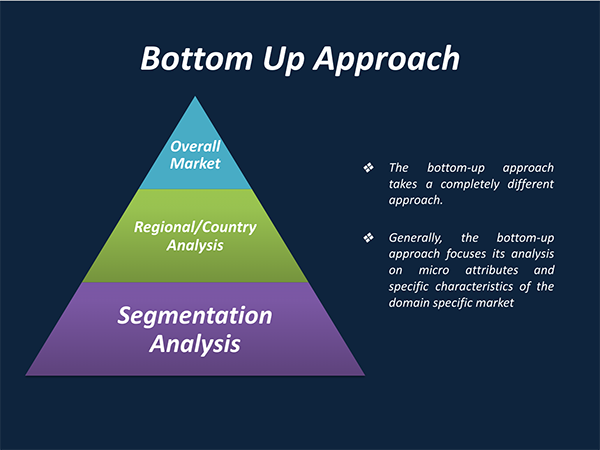
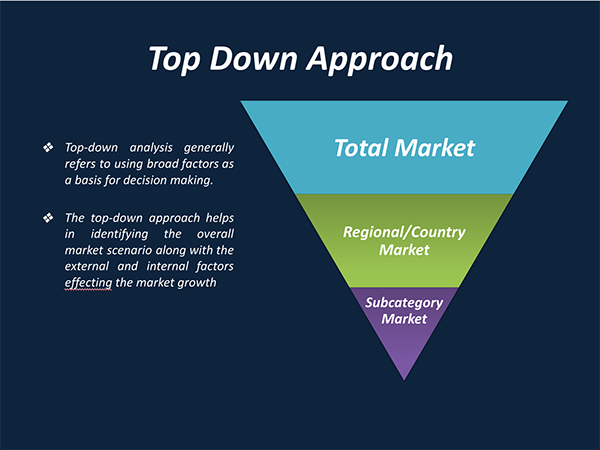
Our research report features both the aspects; qualitative and quantitative. Qualitative part provides insights about the market driving forces, potential opportunities, customer’s demands and requirement which in turn help the companies to come up with new strategies in order to survive in the long run competition. The quantitative segment offers the most credible information related to the industry. Based on the data gathering, we use to derive the market size and estimate their future growth prospects on the basis of global, region and country.
Our market research process involves with the four specific stages.
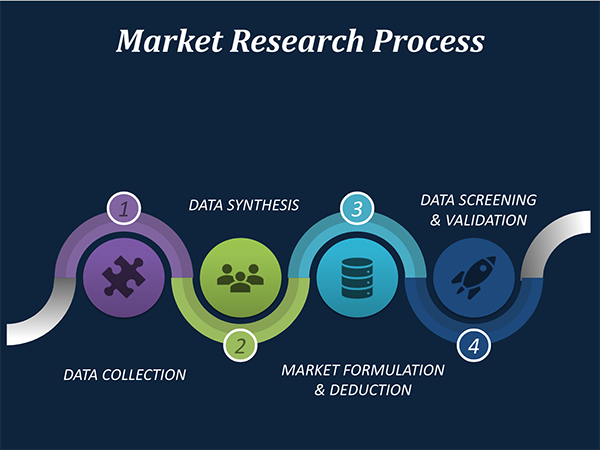
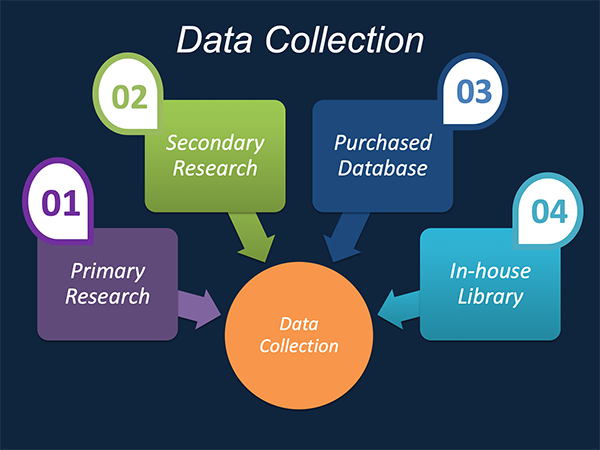
Data Collection: This stage of the market research process involves with the gathering and collecting of the market/industry related data from the sources. There are basically two types of research methods:
Data Synthesis: This stage includes the evaluation and assessment of all the data acquired from the primary and secondary research. It likewise includes in evaluating the information for any disparity watched while information gathering identified with the market. The data & information is gathered with consideration to the heterogeneity of sources. Scientific and statistical methods are implemented for synthesizing dissimilar information sets and provide the relevant data which is fundamental for formulating strategies. Our organization has broad involvement with information amalgamation where the information goes through different stages:
Market Formulation & Deduction: The last stage includes assigning the data & information in a suitable way in order to derive market size. Analyst reviews and domain based opinions based on holistic approach of market estimation combined with industry investigation additionally features a crucial role in this stage.
This stage includes with the finalization of the market size and numbers that we have gathered from primary and secondary research. With the data & information addition, we ensure that there is no gap in the market information. Market trend analysis is finished by our analysts by utilizing data extrapolation procedures, which give the most ideal figures to the market.
Data Validation: Validation is the most crucial step in the process. Validation & re-validation through scientifically designed technique and process that helps us finalize data-points to be used for final calculations. This stage also involves with the data triangulation process. Data triangulation generally implicates the cross validation and matching the data which has been collected from primary and secondary research methods.




























ProactiveWe manage our resources 24/7 to identify issues and address them before they become problems

Quality & ReliabilityWe are committed to providing reliable and highly accurate data with an excellent quality control system

Global Outreach6 Major regions and 40+ countries level analysis accomplished

Competitive PricingOur pricing strategy is highly competitive in the market, without compensating on the quality and the timeline of project delivery
Hi John,
Thanks for the report. We've been going through it and see some good data on the market and players. –

Hi Rahul,
Thank You for the report it is good and beneficial for me.
Thank You in Advance

Dear Siddhartha,
Thank you for your fast reply. The report arrived safe and sound, evrything looks all right.
Thank you very much for your assitance and I will be looking forward to another opportunity for cooperation.

Dear Siddhartha, The report looks good, and we believe the material mix is more realistic now. It is good to know you report “Net” Manufacturing Selling Price, as that can make a difference in how we view the numbers. The reports were great and we appreciate your working with us. Thanks for all your help!

Hi Siddhartha-san, Many thanks for sending trade map with final report. Best regards,

Hello Sapna,
Thanks for the report. We've been going through it and see some good data on the market and players.
Free Customization
Countries can be added on demand
Free yearly update on purchase of Multi/Corporate User License
Companies served till date

We serve our customers 24x7 for 365 days through calls, emails and live chat options.

Huge database of exceptional market reports bringing market intelligence to your fingertips.

SSL enabled, we offer you various secured payment options for risk free purchase.



 IND
IND